


End-to-end validation and HiL engineering for model simulations across vehicle domains, script generation, and automated test framework development to ensure accurate representations and early failure identification.

360-degree network testing and end-to-end optimization of next-gen technologies through XiL validation and virtualization, DevOps, data automation, virtual hardware and software, remote testing, AI-based test case generation, data analytics for ADAS and EV, and connectivity validation.

Comprehensive and customizable full-stack IoT testing solutions for any system configuration and cloud platform covering AI, Big Data, security, microservices, and wireless connectivity.

Custom-built and compact test equipment systems, which include a virtual remote control system, automated verification fault injection system, and in-circuit testing for End-of-Line (EOL) and automated validation processes.

Al-powered sound engineering and diagnostic solutions for acoustic or NVH assessments, leveraging modal testing, NVH simulation, and acoustics and vibration measurement expertise.

Test bench development for reliable and accurate testing environments, Load Box technology for accurate load simulations, and Switching Box solutions for flexible and robust electrical and electronic testing and debugging.

Vibration and thermal testing, climatic testing, radiated testing, conducted testing, ESD testing, and salt spray testing for product reliability — adhering to the most stringent international standards, including ISO, IEC, DIN, BSI, ETSI, and other specifications.





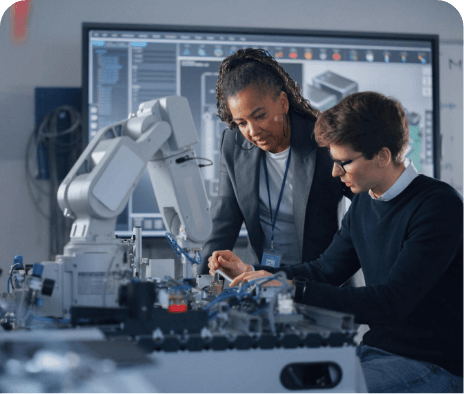
V&V plan is a checklist for testing products. It verifies that everything works as planned and validates the outcome. The major activities include setting objectives, defining scope, inspection, integration testing, requirement analysis, acceptance testing, and software testing.
In the V-model, the software development life cycle is divided into development phases, each integrated with a corresponding testing phase. This approach ensures that verification and validation are integrated throughout the process. It enhances testing at every stage, ensuring quality and alignment with requirements.
HiL testing is challenging for systems with high computational needs as it should satisfy the real-time requirements of feeding hardware with inputs and quickly assessing the outputs. There is complexity involved in developing and maintaining precise simulation models. To overcome these challenges, a thorough V-model approach is required, optimizing the software testing process.
XiL (X-in-the-Loop) and system-level testing are methodologies used in product development and validation. XiL is a group of testing methodologies, including HiL, SiL, and MiL, where individual systems are tested within a simulated environment, validating specific product parts early in the development cycle. On the other hand, system-level testing involves testing the entire integrated system, including hardware and software, ensuring that all components work together as expected in real-world conditions.
Our V&V suite of services creates virtual environments that mimic real-world scenarios through virtualizations and simulations that enable comprehensive testing. We help product manufacturers and enterprises with our verification and validation testing offerings across XiL and system-level testing. From plant modeling, virtualization, DevOps, hardware validation, connected testing, and automation, we empower businesses to develop and release reliable digital products with agility, high quality, and predictability.